

- Share Story
-

-

-

You care for everyone else. Today, let’s make sure you’re cared for, too.
>> Nominate your unit to win 100 Code Calm books (5 signed by Nurse Blake) & donuts! Click here!
This World Mental Health Day, Vivian Health is coming together with Nurse Blake (@nurse.blake) to offer space, recognition, and support to your break room by giving Code Calm: A Nurse’s Guide to Surviving and Thriving and treats to nurses nationwide.
🍩 Bring 100 Code Calm Books & Donuts to Your Team
This World Mental Health Day, we’re gifting one nursing unit:
- 100 copies of Code Calm (including 5 signed copies)
- Fresh donuts for your whole team to share during shift change
👉 Nominate Your Nursing Unit by 10/18/26
(Looking for a copy right now? You can also find Code Calm available on Amazon.)
💬 Win a Signed Copy on Social Media @vivianhealthapp
Mental health isn’t something any nurse should navigate alone. Head over to our Instagram (@vivianhealthapp) between 10/9 and 10/18 to lift up a colleague:
- Tag a nurse or nursing student who could use a little extra appreciation today.
- Leave a note of encouragement in the comments.
- 5 comments will be chosen to receive an individual signed copy of Code Calm!
No purchase necessary. See the Official Rules for the Unit Contest and the Social Media Giveaway.
The Nurse Blake rehab story starts with a 30-day treatment stay, where he realized he wasn’t the only healthcare worker struggling. This prompted him to co-author a survival guide for nursing burnout and trauma.
Key Takeaways
- The Backstory: Viral content creator Nurse Blake (@nurse.blake) reveals he checked into a 30-day mental health rehabilitation facility in 2024 after reaching a breaking point with personal trauma and burnout.
- The Inspiration: Meeting three fellow nurses inside rehab prompted Blake to create Code Calm, a mental health toolkit co-authored by 11 healthcare professionals.
- What’s Inside: Code Calm offers evidence-based tools and real-world strategies for nursing burnout, compassion fatigue, workplace trauma, and shift-work sleep management.
- The Impact: Book proceeds directly fund free copies of Code Calm for hospital break rooms and nursing school programs nationwide.
If you’re struggling, you’re not alone. If you’re in crisis or having thoughts of suicide, call or text 988 to reach the 988 Suicide & Crisis Lifeline, or chat at 988lifeline.org. You can also text HOME to 741741 to reach the Crisis Text Line. For help finding mental health or substance use treatment, the SAMHSA National Helpline is free, confidential, and available 24/7 at 1-800-662-4357. If you’re in immediate danger, call 911.
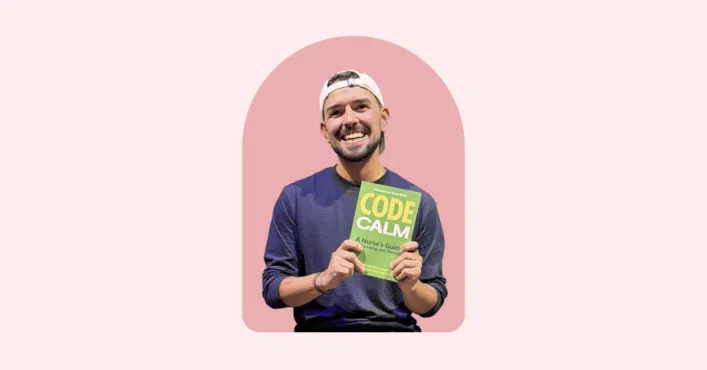
As nurses, we’ve known and loved Nurse Blake (@nurseblake) for his viral social media videos since he first started his Facebook page a decade ago. But, what we don’t know, is that behind the laughter and the viral videos, Blake was struggling. After reaching a breaking point that led him to check into a mental health rehabilitation facility, he’s stripping away the humor to face a raw, uncomfortable truth: the healthcare system is broken, and trying to stay “strong” is hurting a lot of nurses. Born directly out of his own darkest moments and recovery, his new book, Code Calm, is an unvarnished lifeline for any nurse currently struggling with feelings burnout, moral injury, compassion fatigue, or stress under the weight of the job.
“I think a lot of nurses struggle with their mental health but are afraid to talk about it because we’re supposed to be the ‘strong’ and ‘resilient’ ones,” Nurse Blake tells Vivian Health. “That pressure can make it hard to admit when we need help. I wanted Code Calm to help open up those conversations and give nurses practical tools and a reminder that we deserve care, too.”
About Code Calm, For Nurses Written By Nurses
Code Calm is called a “survival guide” for nurses because that’s exactly what it is. Nurse Blake describes it as honest stories and practical tools from nurses who have been there, with real solutions and stories. It is available now on Amazon and all proceeds go to support other nurses and nursing students.
The book makes sense because nursing is a job that you often just have to grit your teeth and get through, with no downtime to process or reflect on what the profession actually demands and what it can take from you.
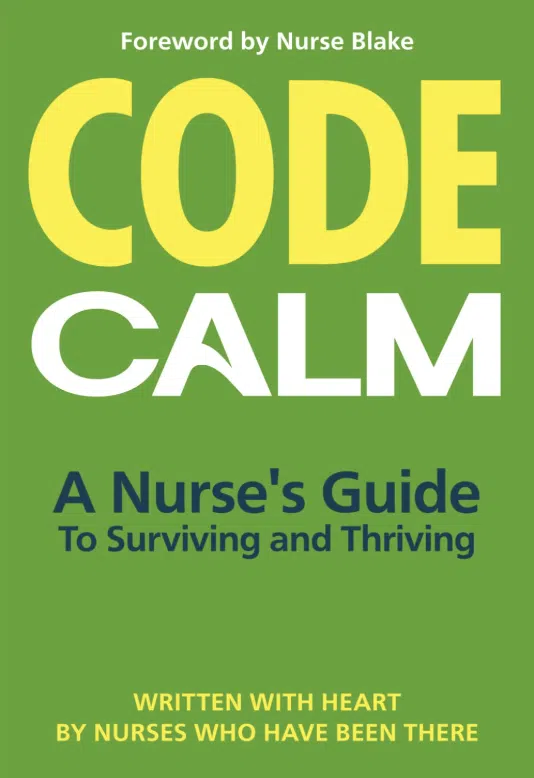
>>Buy It Now on Amazon (all proceeds go to gift books to others!)
“Nursing is a demanding and challenging profession,” he points out. “We can experience such a wide range of emotions in a single shift, and we don’t always get the time or space to process them. Over time, that can take a toll. We’re so used to caring for everyone else that we often forget to care for ourselves.”
Throughout the book, nurses can find personal stories, reflection questions, and practical tools to come back to whenever they need them. Each chapter covers a nurse-specific topic with a different nurse author who provides first-hand experience and insight. The chapters include things like:
- Burnout
- Compassion fatigue
- Relationships
- Boundaries
- Trauma
- Sleep
- Finding your purpose in nursing
Nurse Blake adds that he wanted the book to be very practical for nurses. After all, we’re the ones who always find the solutions, right? For instance, he says that nurses hear the word ‘burnout’ all the time in nursing, but aren’t always offered solutions or guidance on what to do while experiencing it. Or, night shift nurses are constantly told that lack of sleep can harm their health, which is not super helpful when you’re expected to be up all night, caring for others.
So, the book addressed both. There’s even a chapter from Maggie Aime’s for shift workers that goes well beyond “just go to bed earlier,” which isn’t much help when you clock out at 7 a.m. It covers protecting your sleep from interruptions and setting clear expectations with the people you live with, because being home during the day doesn’t mean you’re available for everyone’s errands.
The chapter even includes Nurse Blake’s favorite tip, from a nurse who blocked her bedroom windows with aluminum foil and duct tape. “Very resourceful. Very nurse,” he comments.
“We wanted to provide practical, evidence-based advice that acknowledges the realities of being a nurse, including shift work and the emotional weight we carry home,” Nurse Blake adds. “Whether you read one chapter or the whole book, the goal is for you to walk away with something you can actually use.”
Gifting Books
All proceeds from Code Calm sales go toward funding free copies of the book for nurses and nursing students. Through his Nurse Support Network, Nurse Blake is using the funds to place free copies directly into hospital break rooms and nursing school programs across the country.
Nurse Blake Rehab: Born From His Own Mental Health Journey
The idea for Code Calm began in the summer of 2024, during Blake’s stay in a mental health rehab facility.
He spent 30 days there with no phone, no computer, and no connection to the outside world.
For one of the first times in his adult life, he wasn’t Nurse Blake, just Blake. With no work to hide in, no videos to make, and no one to make laugh, he had to sit with his own thoughts, face his trauma, and let others take care of him. “That was hard,” he says.
The experience also showed him he wasn’t alone. In fact, the first three patients he met at the facility were also nurses. He’d gone in feeling isolated and found people who understood parts of his life without explanation. That moment, he says, was a big part of what inspired the book.
“It made me think about how many of us are struggling while still showing up and taking care of everyone else,” Nurse Blake recalls of meeting other nurses in the facility. “We were nurses, but in that space, we were also people who needed care. Connecting with them was a big part of what inspired Code Calm.”
>>Explore Healthcare Jobs & Compare Pay Rates Now!
Stronger Together
Just like Nurse Blake found strength through the other nurses in his mental health program, joining the voices of many other healthcare professionals together is what makes Code Calm what it is.
The book is about immediate help and support for nurses, but he also stresses that it’s about the bigger picture for healthcare professionals too. “One message I keep coming back to is that you deserve care, too,” he stresses. “You don’t have to wait until you’re completely falling apart to ask for support.”
For instance, Danyel Portillo’s chapter details how he cared for a retired ICU nurse who spent years putting off travel and the things he wanted to do, only to become seriously ill shortly after retiring. For Blake, it’s a reminder of the importance of having a life outside nursing.
“We spend so much time caring for other people’s lives, and our own lives are happening, too.”
To help spread that message, that nurses deserve care both right now and for their future selves, Nurse Blake shares that his goal is for Code Calm to have a place in every nursing school and hospital break room. Proceeds from purchases will fund free copies for hospitals and nursing programs across the country.
For Nurse Blake, the tangible book is meaningful to him personally, and he hopes other nurses will find the book helpful. “I love seeing the idea become something you can actually hold,” he says. “For a long time, it was something I wanted to make happen. Now it’s something a nurse can read and say, ‘I feel seen.’”
In the end, he shares that if anyone knows what it’s like to plaster a smile on your face, force a laugh, or be the “strong” one to inspire others, it’s nurses. And they, like Nurse Blake, deserve to be seen behind the smile, too.
“A lot of people know me through comedy, and I love being able to give nurses a chance to laugh about things only we understand,” he says. “But I also know what it feels like when you go home, and you’re still struggling.”
You can find Code Calm on Amazon.
Full Q&A With Nurse Blake
Can you tell us, in your own words, what Code Calm is?
Code Calm is a resource and toolkit for nurses who might be struggling mentally or emotionally, or who just need some support navigating everything that comes with this profession. It brings together honest stories and practical tools from other nurses who’ve been there. You can read it cover to cover or go straight to the chapter you need that day. My hope is that it helps nurses feel less alone and provides them with some solutions to the challenges they might be facing.
Why do you think this book is so necessary?
Nursing is a demanding and challenging profession. We can experience such a wide range of emotions in a single shift, and we don’t always get the time or space to process them. Over time, that can take a toll. We’re so used to caring for everyone else that we often forget to care for ourselves.
I think a lot of nurses struggle with their mental health but are afraid to talk about it because we’re supposed to be the “strong” and “resilient” ones. That pressure can make it hard to admit when we need help. I wanted Code Calm to help open up those conversations and give nurses practical tools and a reminder that we deserve care, too.
What can readers expect to find in Code Calm?
There are 10 chapters covering topics like burnout, compassion fatigue, relationships, boundaries, trauma, sleep, and finding your purpose in nursing. Throughout the book, you’ll find personal stories, reflection questions, and practical tools you can come back to whenever you need them.
We hear the word “burnout” all the time in nursing, but we aren’t always offered solutions or guidance on what to do when we’re experiencing it. We wanted to provide practical, evidence-based advice that acknowledges the realities of being a nurse, including shift work and the emotional weight we carry home. Whether you read one chapter or the whole book, the goal is for you to walk away with something you can actually use.
How long has this project been in the making? Is there anything you can share about what prompted you to check yourself into the mental health program?
The idea for Code Calm started in the summer of 2024, when I checked myself into a mental health rehab facility. I was going through one of the darkest periods of my life, and I knew I couldn’t keep trying to get through it on my own. I needed help.
I spent 30 days there with no phone, no computer, and no connection to the outside world. For one of the first times in my adult life, I wasn’t Nurse Blake. I was just Blake. I couldn’t distract myself with work, make another video, or focus on making everyone else laugh. I had to sit with my own thoughts, face my trauma, and allow other people to take care of me. That was hard.
That experience made me want to create something for other nurses who were struggling, too. The other authors and I spent over a year turning that idea into this book. There were a lot of emotional Zoom meetings as we shared our experiences and talked about what we wished we’d known when we were struggling. Those conversations helped shape both the stories in Code Calm and the practical tools we wanted readers to take away.
Did it surprise you when you realized how many nurses were in the mental health program with you?
Yes!! The first three other patients I met were also nurses. That really stayed with me. I went in feeling alone, and suddenly I was meeting people who understood parts of my life without me having to explain everything.
It made me think about how many of us are struggling while still showing up and taking care of everyone else. We were nurses, but in that space, we were also people who needed care. Connecting with them was a big part of what inspired Code Calm.
This book is a little different than anything you’ve done before. Why was this project so important to you?
A lot of people know me through comedy, and I love being able to give nurses a chance to laugh about things only we understand. But I also know what it feels like when you go home and you’re still struggling.
I wanted to create something nurses could reach for during those moments. Something they could keep at home, put in their work bag, or find in a break room after a hard shift. This project came from a very personal place, and being honest about that matters to me.
Is writing new to you? What was the journey of writing and collaborating with writers like, personally and professionally, and what does it mean to now be a published author?
Writing is part of what I do with comedy and content, but working on a book like this is a different experience. Onstage, you get an immediate response. With a book, someone might read the words alone months later, and you have to think about what you want them to take away.
I didn’t want this book or project to be about me. I wanted it to be a collective of contributors who brought their own experiences, perspectives, and expertise. Personally, it meant being open about why this book mattered to me. Professionally, it meant making room for other voices. Holding the finished book and knowing where the idea started makes me pretty emotional.
What was your favorite part of the book-writing process?
Seeing how much the contributors were willing to share. Their honesty is what makes the book feel personal. You’re hearing from people who have struggled, questioned themselves, and had to figure out how to care for themselves, too.
I also loved seeing the idea become something you can actually hold. For a long time, it was something I wanted to make happen. Now it’s something a nurse can read and say, “I feel seen.”
What was the hardest part?
The hardest part was figuring out how to do these topics justice. We’re talking about surviving and thriving in a profession where people still feel uncomfortable admitting they’re struggling. We wanted to be honest and go deep, but that takes care, space, and thought. We also wanted readers to walk away with something practical. Finding that balance across 10 chapters, without repeating ourselves or leaving out something important, was a challenge.
How did you choose the nurses who participated in the book?
Putting this book together, I knew I didn’t want it to be just about me. I wanted to bring together voices from the nursing community, people who had been through their own struggles and were willing to share their stories. The authors were a mix of people I’d worked with in the past and people who expressed interest in joining the project. I was joined by 10 other nurses and a paramedic, all of us bringing different backgrounds, experiences, and perspectives to the book.
While each chapter had its own authors, the editors, Jennifer Herrmeyer and Maggie Veloski, did an incredible job bringing it all together so the book felt cohesive while still keeping each author’s story and intention.
I really want to give a shoutout to all of our authors and editors. We’ve worked so closely over the past 12 months, and I’m grateful for the time, care, and honesty everyone put into this. Some of these stories are deeply personal, and sharing them with the world isn’t easy. It takes a lot to revisit difficult moments in your life and put them on paper. This book exists because they were willing to do that, and I’m really proud of what we created together.
Do you have a favorite story or message from the book?
One message I keep coming back to is that you deserve care, too. You don’t have to wait until you’re completely falling apart to ask for support.
There’s also a story in Danyel Portillo’s chapter about caring for a retired ICU nurse who had spent years putting off travel and the things he wanted to do, only to become seriously ill shortly after retiring. That story gets at something I care about deeply: having a life outside of nursing. We spend so much time caring for other people’s lives, and our own lives are happening, too.
The listing mentions sleep tips. Do you have any unusual sleep hacks in the book readers should look forward to?
Maggie Aime wrote an entire chapter for shift workers, so it goes beyond “just go to bed earlier,” which is not particularly helpful when you’re clocking out at 7 a.m.
One example that made me smile is a nurse using aluminum foil and duct tape to block out the light from her bedroom windows. Very resourceful. Very nurse. I was that nurse when I worked on nights.
The chapter also talks about protecting your sleep from interruptions and setting clear expectations with the people you live with. Just because you’re home during the day doesn’t mean you’re available to run everyone’s errands.
If you had to choose, what is the single most important step toward self-care a new nurse could make? Other than buying your book, of course!
Find someone you can be honest with. Someone you can tell, “That shift really affected me,” or “I’m having a hard time,” without feeling like you have to immediately follow it with, “But I’m fine.”
That could be a trusted friend, a mentor, or a therapist. When you’re new, there’s so much pressure to prove that you can handle everything. I want new nurses to know that asking for support can be part of how you handle it.
What would you like Vivian Health readers to know most about Code Calm?
You don’t have to be in crisis for this book to be for you. Maybe you’re having trouble switching off after work. Maybe you’ve stopped enjoying things you used to love. Maybe you just want to build healthier habits early in your career.
You can start wherever you are and take what’s helpful. My hope is that somewhere in these pages, you recognize yourself and feel comfortable being a little more honest about what you need to thrive.
Is there anything else you’d like to say?
My goal is for Code Calm to have a place in every nursing school and hospital break room. Proceeds from purchases will go to provide free copies to hospitals and nursing programs across the country.
This idea came from one of the darkest times in my life. I hope something that grew out of that experience can help another nurse feel supported. Whether you get a copy for yourself, give one to a friend, or leave one in your break room, you could help it reach someone who needs it.
>>Explore Healthcare Jobs & Compare Pay Rates Now!
If you’re struggling, you’re not alone. If you’re in crisis or having thoughts of suicide, call or text 988 to reach the 988 Suicide & Crisis Lifeline, or chat at 988lifeline.org. You can also text HOME to 741741 to reach the Crisis Text Line. For help finding mental health or substance use treatment, the SAMHSA National Helpline is free, confidential, and available 24/7 at 1-800-662-4357. If you’re in immediate danger, call 911.
This article is for informational purposes only and isn’t a substitute for professional medical or mental health advice, diagnosis, or treatment.