



- Share Story
-

-

-

Physician assistants (PAs), increasingly called physician associates, are positioned to enjoy an in-demand, highly rewarding healthcare career while improving patient outcomes and access to care. With the ability to diagnose, treat and manage care across diverse medical specialties, PAs offer essential support in nearly every setting from urban hospitals to rural clinics.
As the healthcare system faces rising patient volumes and ongoing provider shortages, the demand for skilled PAs continues to gain strength. Whether you’re drawn to primary care, emergency medicine or mental health, there’s no shortage of PA job opportunities. Vivian Health’s 2025 employment forecast for PAs covers job outlook trends, average physician assistant salaries and what makes this dynamic career path so appealing right now.
Overall Demand for PAs
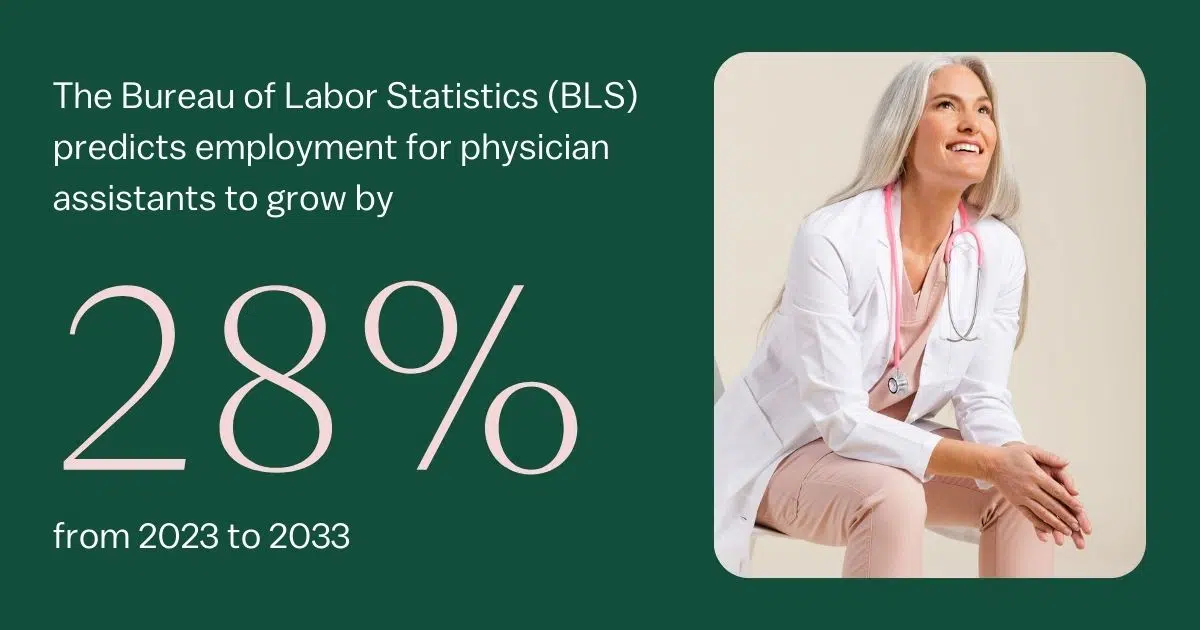
The U.S. Bureau of Labor Statistics (BLS) projects a 28% growth in physician assistant employment from 2023 to 2033, adding approximately 43,700 new positions. By 2033, total PA employment is expected to reach 197,100. This growth rate is among the highest for all occupations, highlighting the increasing demand for PAs in the healthcare system. About 12,900 job openings for PAs are anticipated each year, primarily due to employment growth and the need to replace professionals exiting the workforce.
In recognition of their critical role in healthcare, PAs have been ranked among the fastest-growing occupations, with a median annual wage of $130,020 as of August 29, 2024, when it was last modified on the BLS site. For eight consecutive years, U.S. News & World Report has ranked PA jobs as one of the top roles in healthcare, currently ranked at No. 2 and ranked No. 3 among the top 100 best jobs among all professions. This positive career outlook highlights the vital contributions PAs make in enhancing patient access to quality care across medical settings.
In-Demand PA Specialties
As healthcare needs grow more complex, physician assistants are stepping into specialized roles to meet demand across a range of fields. From primary care to surgical subspecialties, certain PA specialties are seeing faster growth due to patient demand, provider shortages and shifting care models.
Analyzing data collected from Vivian on April 1, 2025, some in-demand specialties for staff PAs, based on the number of job postings, included the following:
- Cardiovascular/Cardiothoracic Surgery
- Critical Care/Intensive Care
- Emergency Medicine
- Urgent Care
- Urology
PAs specializing in cardiovascular/cardiothoracic surgery have become particularly sought-after. The CDC states that cardiovascular disease causes one death every 33 seconds in the United States. Heart disease was responsible for nearly 703,000 deaths in 2022, equating to 1 in every 5 deaths that year. Hospitals, medical practices and other healthcare facilities seek cardiovascular/cardiothoracic surgery PAs to care for patients experiencing coronary artery disease, heart attacks and other cardiovascular conditions.
In-demand travel PA specialties posted on Vivian on the same date were Cardiothoracic Surgery and Pediatric Medicine.
Related: 10 Highest-Paying Physician Assistant Specialties for 2025
PA Employment Opportunities by State
States with higher populations tend to have the most opportunities for healthcare professionals, including PAs. While California historically takes first on this list, based on data from the BLS on May 2023, New York knocked it out of the top spot. The 10 states with the highest employment of physician assistants on the most current list were:
- New York: 16,690
- California: 12,880
- Florida: 9,060
- Pennsylvania: 8,730
- Texas: 8,630
- North Carolina: 8,180
- Michigan: 5,310
- Ohio: 4,190
- Massachusetts: 4,130
- Illinois: 3,890
Additionally, cities with dense populations tend to have higher demands for healthcare services, so they typically have more physician assistant jobs available. If you’re looking to relocate or travel to a new city and want to increase your chances of finding employment, it may be beneficial to explore job opportunities in large metropolitan areas.
The following five metro areas had the largest Physician Assistant employment in May 2023, per the BLS:
- New York-Newark-Jersey City, NY-NJ-PA: 15,020
- Los Angeles-Long Beach-Anaheim, CA: 3,650
- Boston-Cambridge-Nashua, MA-NH: 3,210
- Philadelphia-Camden-Wilmington, PA-NJ-DE-MD: 3,170
- Dallas-Fort Worth-Arlington, TX: 3,160
Three metros are new to the top five this year, excluding the New York and California metros. Fluctuations in geographic distribution for these advanced practice professionals can occur for many reasons, including demographic shifts, economic growth or decline in a metro, workforce redistributing when new facilities open, patient demand spikes or even data collection and reporting variations from one year to the next.

7 Factors Driving Increased Demand for Physician Assistants in 2025
The healthcare landscape evolves rapidly, and physician assistants are advanced practice providers at the forefront of medical care. Here are seven key factors fueling the heightened demand for PAs in 2025, some of which will likely impact these and other healthcare professionals for many years to come.
1. Aging Population
As of April 2025, baby boomers, which include those born between 1946 and 1964, are now between the ages of 60 and 78. As this massive generation ages, the need for healthcare services escalates. Older adults often require more medical attention, leading to a surge in demand for healthcare providers. PAs are instrumental in addressing this need by offering comprehensive care across various settings.
2. Rising Prevalence of Chronic Diseases
Chronic conditions are on the rise. The CDC estimates that 129 million Americans have at least one major chronic disease, such as diabetes, hypertension, heart disease, cancer and obesity. Furthermore, five of the 10 leading causes of death in the nation are tied to preventable and treatable chronic diseases. Managing these diseases necessitates continuous and coordinated care. PAs are crucial in delivering this care, ensuring patients receive timely interventions and education to manage their health effectively.
3. Expanding Healthcare Access
Legislative changes and healthcare reforms have increased access to medical services for many individuals. This expansion has led to a greater need for qualified healthcare professionals. PAs, with their versatile training, are well-equipped to provide high-quality care in diverse environments, including rural and underserved areas. The National Rural Health Association recognizes the significant resource PAs represent in helping solve the rural healthcare crisis, and many PAs are eager to step in to provide the care these communities need to thrive.
4. Ongoing Physician Shortages
The healthcare industry is experiencing an ongoing shortage of trained physicians nationwide, primarily in primary care but also in specialties related to cardiology, obstetrics/gynecology, anesthesiology and nephrology. A report from the Bureau of Health Workforce (BHW) released in November 2024 projects a shortage of 124,180 full-time physicians by 20237, jumping to 187,130 by 2037. These numbers indicate the problem will only worsen over the next decade.
This gap has elevated the role of PAs, who can perform many of the same functions as physicians, thereby alleviating the strain on the healthcare system and ensuring patients continue to receive necessary care. Based on workforce projections, the BHW anticipates 100% adequacy of PAs as early as 2037. However, further declines in trained physicians and expansions in the roles and capabilities of PAs could drive demand higher than supply for more years than projected.
5. Seeking More Cost-Effective Care Models
Healthcare systems are increasingly focusing on cost efficiency without compromising quality. Employing PAs has proven to be a cost-effective strategy, as they provide a broad range of medical services at a lower cost than physicians. This approach helps healthcare facilities manage expenses while maintaining high standards of patient care.
According to the American Medical Association, money spent on healthcare in the United States hit nearly $4.5 trillion in 2022. Labor makes up the largest percentage of hospitals’ expenses. The Healthcare Financial Management Association reports that costs are reduced by as much as $2,000 for complex patient care when delivered by advanced practice providers.
6. Embracing Advancements in Team-Based Care
Modern healthcare emphasizes collaborative, team-based approaches to patient management. PAs are integral members of these teams, working alongside physicians, nurses and other healthcare professionals to deliver comprehensive care. Their ability to adapt and collaborate enhances patient outcomes and streamlines healthcare delivery.
Furthermore, when patients must see multiple healthcare providers, imaging studies and diagnostic tests can be duplicated. By adopting a team-based approach, a physician assistant can help prevent this repetition and contribute to reducing the overall cost of patient care.
7. Acknowledging Restrictiveness of Single-State Licenses
Currently, physician assistants must apply for a new state license in each state they practice. The application process can be cumbersome, time-consuming and costly for PAs working in a healthcare facility along state lines, as a telehealth provider or in travel PA jobs. The nature of single-state licenses may impact access to care and increase demand for PAs where there aren’t enough of them.
The American Academy of Physician Assistants is advocating for a PA licensure compact, in which PAs can hold one license in a participating state and practice across state lines in other states participating in the agreement. If this compact becomes a reality and becomes active across multiple states, it will significantly loosen practicing across borders while likely increasing the PA job demand further.
How Much Does Physician Assistant Jobs Pay?
While it’s obvious that PAs have a positive employment forecast based on demand, it’s also crucial to know what kind of salary you can anticipate in this field. Physician assistant salaries remain competitive, especially as healthcare organizations continue to rely on them to fill care gaps.
Based on Vivian’s salary data from April 1, 2025, the national average hourly rate for staff PA positions was $86.30. However, some states offered even higher compensation. In California, staff PAs earned an average of $94 per hour, with top earners making up to $107. These figures reflect general practice roles, meaning specialized PAs could command even higher rates.
In contrast, staff compensation varied significantly by region. Georgia reported a much lower average of $58 per hour for staff PAs, highlighting the regional disparities in pay across the country. On this same date, Vivian’s travel PA salary data indicated the average weekly rate for PA travel contracts nationwide was $4,109 based on active postings over the past seven days.
Highest-Paying PA Specialties
Physician assistants work in over 60 specialties, offering a broad range of potentially higher salaries when they focus on an in-demand niche. On June 6, 2024, the American Academy of Physician Assistants released a list of the top 10 highest-paying staff salaries in the PA profession for 2023. According to its findings, cardiovascular/cardiothoracic surgery accounts for just 2.4% of PA employment despite being the highest-paid specialty at a median rate of $158,470 annually. Rounding out the top three, dermatology PAs earned a median wage of $150,000 yearly and emergency medicine PAs earned $141,440.
According to Vivian’s salary data on April 1, 2025, PAs in the cardiovascular/cardiothoracic specialty earned an average salary of $90.43 per hour, making it the highest-paid PA specialty on our site. Comparatively, Vivian reported an average hourly wage of $76.27 for dermatology PAs but $84.81 for emergency medicine physician assistants on this date.
Discover more about the PA role in Vivian’s Physician Assistant Career Guide, including qualifications, skills, pros and cons of this healthcare career and additional salary insights.


